
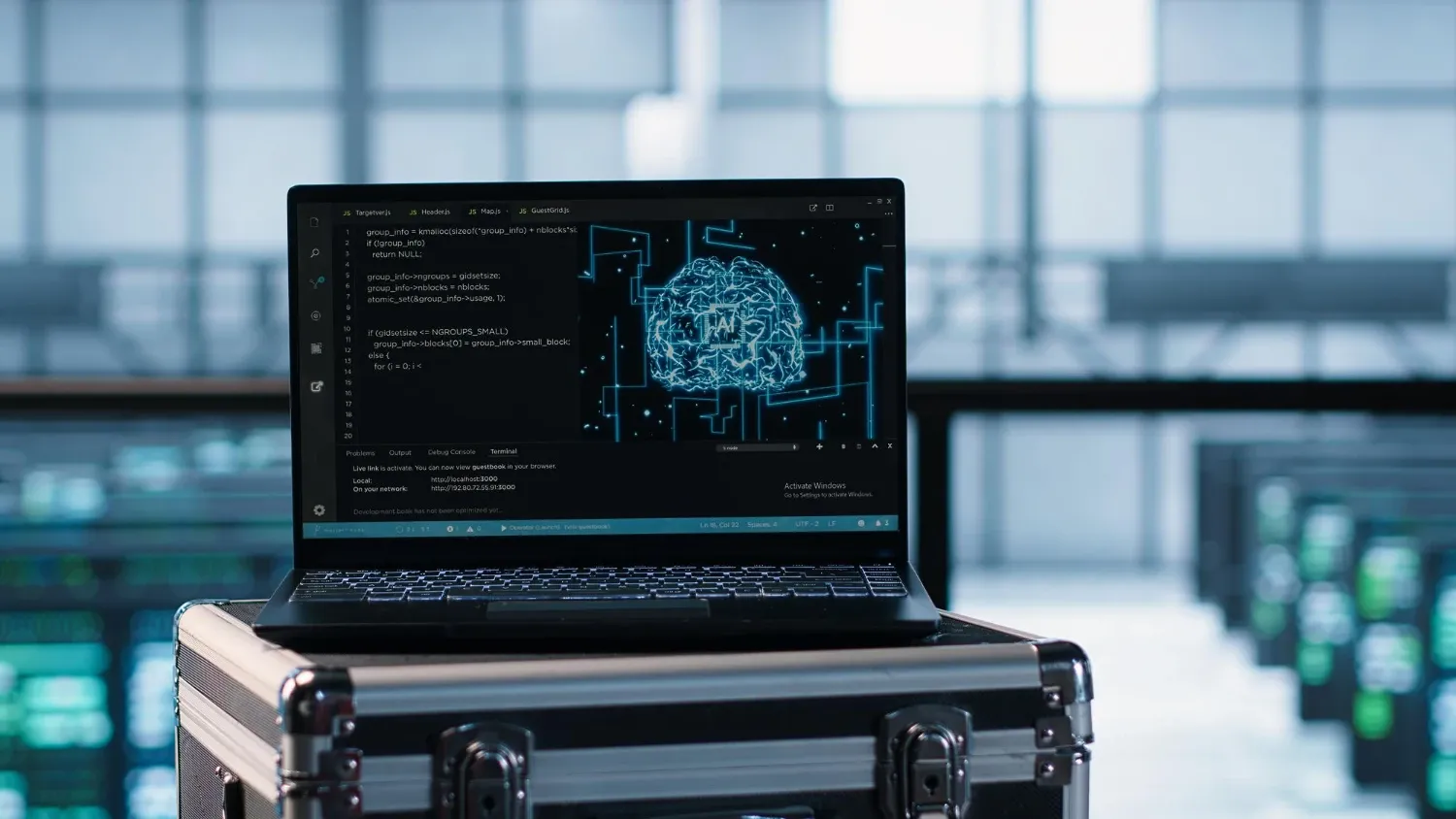
Over the past year, the promise of artificial intelligence has moved from theoretical research into the hands of everyday users, yet many people remained unable to tap into its potential because AI-capable devices were either prohibitively expensive or reliant on continuous cloud connectivity. Microsoft’s new Copilot+ PCs upend that paradigm by embedding a dedicated neural processing unit (NPU) into two affordable Surface models— a 13-inch laptop starting at $899 and a 12-inch tablet beginning at $799—bringing advanced AI features directly onto devices that fall within reach of students, freelancers, and small-business professionals. By integrating on-device AI into Windows 11 itself, these machines perform tasks such as instant language translation, context-aware assistance, and generative image editing entirely locally, ensuring fluid responsiveness even without an internet connection. This shift toward edge computing not only minimizes latency and bandwidth consumption, it also addresses privacy concerns by keeping sensitive data on the device rather than sending it to remote servers. In doing so, Microsoft is democratizing intelligent computing, empowering a broader user base to harness AI as a seamless extension of their daily workflows rather than a luxury add-on. As AI becomes an expected feature in personal computing, the launch of these budget-friendly Copilot+ PCs marks a pivotal moment, signaling that on-device intelligence is no longer reserved for high-end workstations but is poised to become the new standard across the PC market.
Breakthrough Hardware at an Accessible Price
At the core of the new Copilot+ PCs lies Qualcomm’s Snapdragon X Plus system-on-chip, a unified architecture that combines an octa-core CPU with a high-throughput NPU capable of tens of trillions of operations per second. This single-chip design streamlines power delivery and thermal management, enabling fan-cooled or passive-cooled form factors that remain sleek and portable. Despite carrying advanced AI accelerators, both the 13-inch Surface Laptop and 12-inch Surface Pro preserve battery life comparable to non-AI ultrabooks, delivering up to 14 hours of mixed-use on a single charge. By targeting a sub-$900 price point, Microsoft has strategically undercut competitors whose AI-equipped laptops often start above $1,200, thus making localized inference capabilities accessible to a mass market. The inclusion of Wi-Fi 6E, Bluetooth 5.3, and modern LPDDR5 memory further ensures that these devices handle both routine productivity tasks and AI workloads with aplomb. In crafting this affordable hardware package, Microsoft demonstrates that adding an NPU need not inflate costs dramatically; instead, optimized silicon partnerships and economies of scale can deliver powerful on-device AI without compromising mainstream appeal.
Core AI Features Empowering Productivity
Microsoft has woven a suite of Copilot features deeply into Windows 11, ensuring that on-device AI boosts productivity in everyday scenarios. Recall continuously indexes the user’s workspace—capturing open documents, browser tabs, and screen snippets—so a natural language query can instantly surface past context. Click to Do enables in-line commands: users can highlight a table in a spreadsheet and ask Copilot to sort or visualize it without leaving the application. Image Edit provides localized generative capabilities, allowing for background removal, color adjustments, or compositional changes with conversational prompts. Live Translate leverages the NPU for near-instant subtitles during video calls, facilitating multilingual collaboration while preserving privacy. Beyond these marquee features, AI-powered writing assistance corrects grammar, suggests tone adjustments, and condenses long passages into concise summaries, all executed locally to avoid latency. Together, these capabilities transform Windows 11 from a static operating system into a dynamic partner, helping users navigate complex tasks more efficiently without relying on cloud services or third-party plugins.
Real-World Use Cases Across Sectors
The impact of on-device AI extends far beyond office productivity, touching education, healthcare, creative industries, and frontline operations. In classrooms, students can have lecture recordings transcribed in real time, then ask Copilot to generate study guides or quiz questions during breaks—critical for fast-paced academic settings. Healthcare professionals in remote clinics benefit from voice-powered note-taking that filters out background noise, converting spoken observations into structured reports while maintaining patient confidentiality on-device. Graphic designers and photographers on a budget leverage Image Edit to prototype ideas quickly, removing unwanted elements or testing color palettes without cloud subscription fees. Field engineers use the Surface Pro’s tablet form to capture site photos, annotate blueprints with AI-assisted measurement tools, and generate work orders on the spot. Even in accessibility contexts, on-device speech-to-text and text-to-speech features empower users with hearing or visual impairments to interact with content more independently. By seamlessly integrating AI into familiar workflows, Copilot+ PCs catalyze productivity gains across diverse professional and personal scenarios.
Privacy, Security, and Offline Capability
One of the most compelling advantages of on-device AI is enhanced privacy. Because inference occurs locally, sensitive data—whether medical records, legal documents, or personal notes—never leaves the user’s machine. This reduces exposure to network-based threats, data leaks, and compliance concerns that often accompany cloud processing. Furthermore, with AI models stored and executed on the device, users can enjoy full functionality even in air-gapped environments or areas with intermittent internet coverage. For organizations with strict security policies, Copilot+ PCs eliminate the need for VPNs or external servers to access intelligent features, simplifying IT management and reducing potential points of failure. Microsoft complements the hardware with features like BitLocker drive encryption and Windows Hello biometric authentication, ensuring that both user identity and AI assets remain protected. In balancing convenience with security, these PCs set a new benchmark for trustworthy edge computing.
Battery Life, Thermal Efficiency, and Portability
Integrating an NPU into a thin-and-light PC often comes with trade-offs in battery longevity and heat management, yet the Snapdragon X Plus architecture addresses these challenges head-on. By delegating AI workloads to a dedicated accelerator, the main CPU and GPU can downclock during inference tasks, minimizing power draw. This dynamic scheduling yields up to 14 hours of mixed-use endurance in productivity mode and still delivers 8–10 hours under sustained AI workloads. Thermal performance benefits from the consolidated SoC design: fewer heat-generating chips translate to thinner cooling systems and quieter fan curves. For users who travel frequently, the Surface Laptop and Pro achieve sub-1.3-kilogram weights without sacrificing ports; each device includes USB-C with Thunderbolt support, a headphone jack, and a Surface Connect port. The result is a truly portable AI-capable machine that fits effortlessly into backpacks and can power through long workdays without tethering to an outlet.
Market Implications and Future Outlook

By making on-device AI affordable and ubiquitous, Microsoft is likely to reshape the PC ecosystem. Hardware partners will feel competitive pressure to integrate NPUs into their midrange lines, while software developers will optimize applications for edge inference rather than relying solely on cloud APIs. Educational institutions may prioritize Copilot+ purchases for computer labs, accelerating AI literacy among students. In the enterprise, IT departments may shift budgets away from cloud compute credits toward hardware refresh cycles that include AI accelerators. Looking ahead, we can expect more specialized NPUs optimized for tasks like video analysis or advanced vision processing, further broadening the spectrum of on-device intelligence. As AI becomes a baseline feature rather than a premium add-on, the PC transforms into a truly intelligent assistant. Affordable Copilot+ PCs thus herald a new era in personal computing—one where everyone, regardless of budget, can benefit from the power of artificial intelligence.





Leave a Reply